Guides / ABN, GST and tax basics
BAS for tradies: what it is, what goes on it and when it is due
A business activity statement (BAS) is how GST-registered businesses report and pay GST to the ATO, along with other amounts like PAYG instalments and PAYG withholding. Most small businesses lodge quarterly, generally by the 28th of the month after the quarter ends.
The BAS is the form that scares most new business owners and it should not. It is a summary of what you charged, what you can claim back and what you owe. The real danger is not the form, it is leaving it to the last week and discovering you have spent the GST. This guide explains each part, shows the usual due dates and gives you a simple routine that makes it a half-hour job.
- The BAS reports GST and other tax amounts to the ATO.
- Most small businesses lodge quarterly.
- Self-lodged quarterly BAS is generally due on the 28th of the month after the quarter.
- Set GST aside every time you get paid.
What is a BAS?
A business activity statement is how you report and pay certain taxes to the ATO. If you are registered for GST you will use it to report the GST you charged customers and the GST credits you are claiming on business purchases. Depending on your business it can also include PAYG instalments toward your income tax and PAYG withholding if you pay wages.
What goes on it
- GST on sales: the GST you charged on taxable sales.
- GST credits: the GST you paid on business purchases, backed by tax invoices.
- PAYG instalments: prepayments of your income tax if the ATO has set them up for you.
- PAYG withholding: tax withheld from employee wages, if you have staff.
How the GST part works
The maths is simple. GST collected minus GST credits equals what you pay, or get back.
Sales for the quarter: $44,000 including GST. GST collected: $4,000.
Business purchases for the quarter: $13,200 including GST. GST credits: $1,200.
GST payable: $4,000 less $1,200 = $2,800. That is what to set aside.
Example figures for illustration.
Due dates
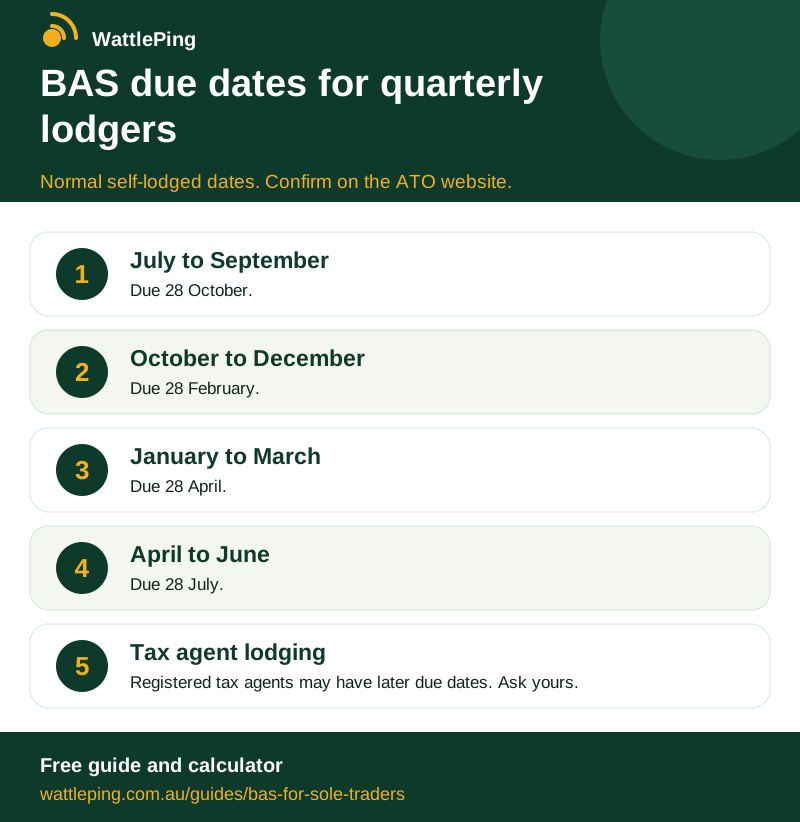
Most small businesses lodge quarterly. If you lodge yourself, the BAS is generally due on the 28th of the month after the quarter ends. Businesses that lodge monthly are generally due by the 21st of the following month. If you use a registered tax agent, they may have extended due dates, so ask them for yours. Always confirm your exact dates on your ATO online services account or on the ATO website.
| Quarter | Months | Normally due (self-lodged) |
|---|---|---|
| Q1 | July to September | 28 October |
| Q2 | October to December | 28 February |
| Q3 | January to March | 28 April |
| Q4 | April to June | 28 July |
Find your date
BAS due date finder
Pick the quarter and see when the activity statement is normally due.
- Normally due by
- Remember
General guide only. Check your own numbers and, for tax, ask your accountant.
A simple routine that keeps it easy
- Issue proper tax invoicesEvery sale gets a tax invoice with GST shown.
- Keep every receiptPhotograph receipts the day you get them. You need tax invoices to claim GST credits.
- Move GST aside weeklyWhen you are paid, move one-eleventh of the total into a separate account.
- Reconcile monthlySpend 30 minutes matching your bank to your invoices and receipts.
- Lodge earlyLodge a week before the deadline so a surprise does not make you late.
How much to set aside
Plan on setting aside GST every time you are paid. If you also pay PAYG instalments, add that. The calculator below helps you see the number.
Tax set-aside calculator
Put a slice of every payment aside for tax. Pick a percentage your accountant is happy with.
- Set aside for income tax
- Set aside for GST
- Left to spend
General guide only. Check your own numbers and, for tax, ask your accountant.
If you will be late
Contact the ATO or your accountant before the due date. Penalties and interest can apply to late lodgements and late payments, and the ATO often has options for people who ask early. Do not ignore a BAS.
Watch out. Lodging late can attract a penalty even if you owe nothing. If you have no activity, you may still need to lodge a BAS. Check with your accountant.
Records you need ready at BAS time
The more you reconcile through the quarter, the shorter this job. If you find yourself digging through a ute full of receipts at the deadline, set up a monthly 30-minute session.
- A list of sales for the period with the GST on each.
- Tax invoices for purchases you are claiming credits on.
- Bank statements, to catch anything you missed.
- PAYG instalment amounts the ATO has told you to pay.
- Details of wages and PAYG withholding, if you have staff.
Quick answers
Who needs to lodge a BAS?
Businesses registered for GST must lodge a BAS. Others may lodge one for PAYG instalments or withholding.
How often do I lodge a BAS?
Most small businesses lodge quarterly. Some choose monthly, and some very small businesses can report annually.
When is my BAS due?
Self-lodged quarterly BAS is generally due on the 28th of the month after the quarter ends. Your ATO account shows your exact date.
Can my accountant lodge it for me?
Yes, and registered tax agents often have later due dates. Ask them for yours.
What if I have no sales this quarter?
You may still need to lodge a BAS. Check with your accountant or the ATO.
What is the difference between a BAS and a tax return?
A BAS reports GST and PAYG amounts through the year. Your income tax return is lodged once a year.
Can I claim GST on everything I buy?
Only on purchases for your business, with a valid tax invoice. Mixed-use items are claimed on the business share.
What should I do if I made a mistake on a BAS?
You can usually revise it. Talk to your accountant or the ATO about how.
Share this infographic
Free to share with a link back. Copy the code below to embed it on your site.
CopiedSources and further reading
This guide is general information, not legal, tax or financial advice. Rules change and differ by state, so check with the ATO, your state regulator or your accountant before you act.
Keep reading
More in ABN, GST and tax basics: Do you need to register for GST as a tradie? The $75,000 rule, explained · How to calculate GST: adding it, taking it out and avoiding the usual slip · Tax deductions for tradies: what you can claim and how to prove it · How much of each payment to put aside for tax · The instant asset write-off explained for tradies. All guides, WattlePing features, pricing.